Thermo decking — thermo-treated larch
Natural wood for terraces, gardens, pools and outdoor spaces. Thermo-treated larch — a warm brown tone and moisture resistance, with no chemicals. We have material ready in stock — in limited quantities for the 2026 season.
Why thermo decking
Natural wood, prepared for the years ahead.
Through thermal treatment the wood gains higher resistance to outdoor conditions while keeping its natural beauty, warmth and character.

Natural material
Made from natural wood, with no chemical treatment.

Durability
Thermal treatment increases resistance to moisture, fungi and insects.

Comfort
Beauty you can see — and feel.

Long service life
Built for years outdoors.
Thermo decking in stock
Real material in stock — ready for delivery and installation.


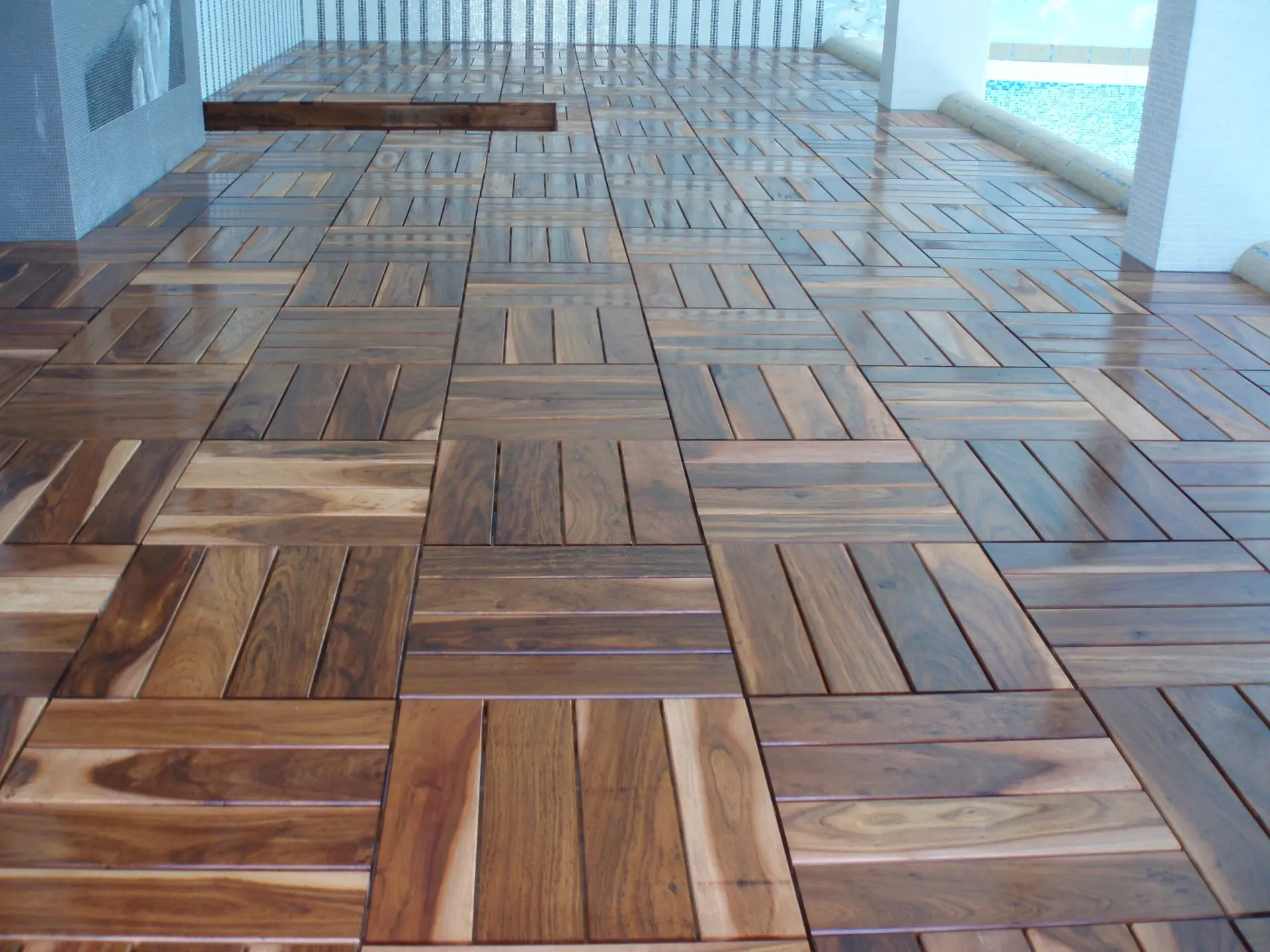
Ready for your next favorite outdoor spot?
Share your project or dimensions and you will receive a professional recommendation tailored to your space and the way you will use it. An indicative quote within 24 hours.
Decking in completed outdoor spaces
Selected projects on roof terraces, around pools, in gardens and by the sea. On every site the wood species, the profile and the substructure are chosen to suit the base, the exposure and the way the deck will be used.
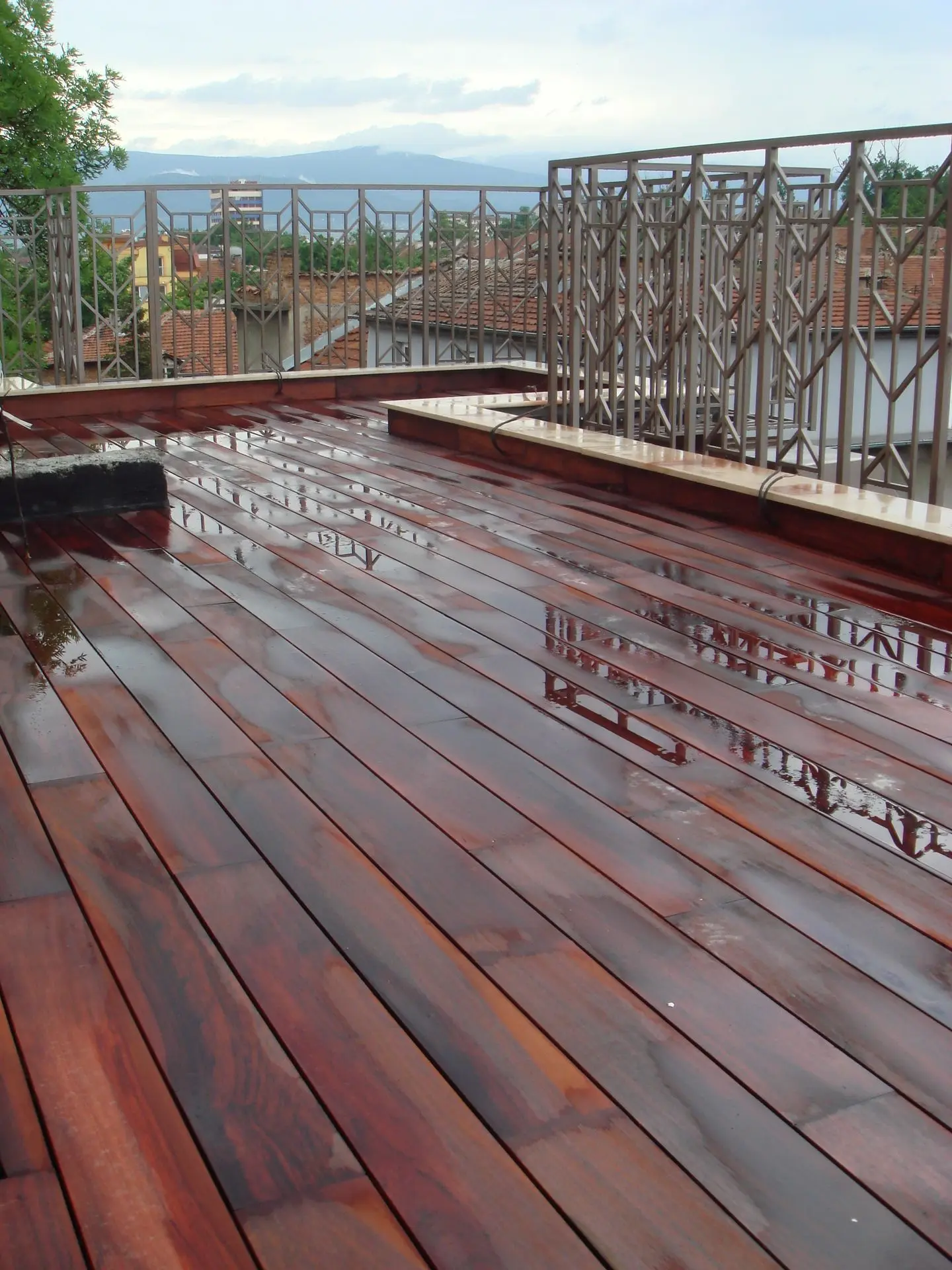 merbau
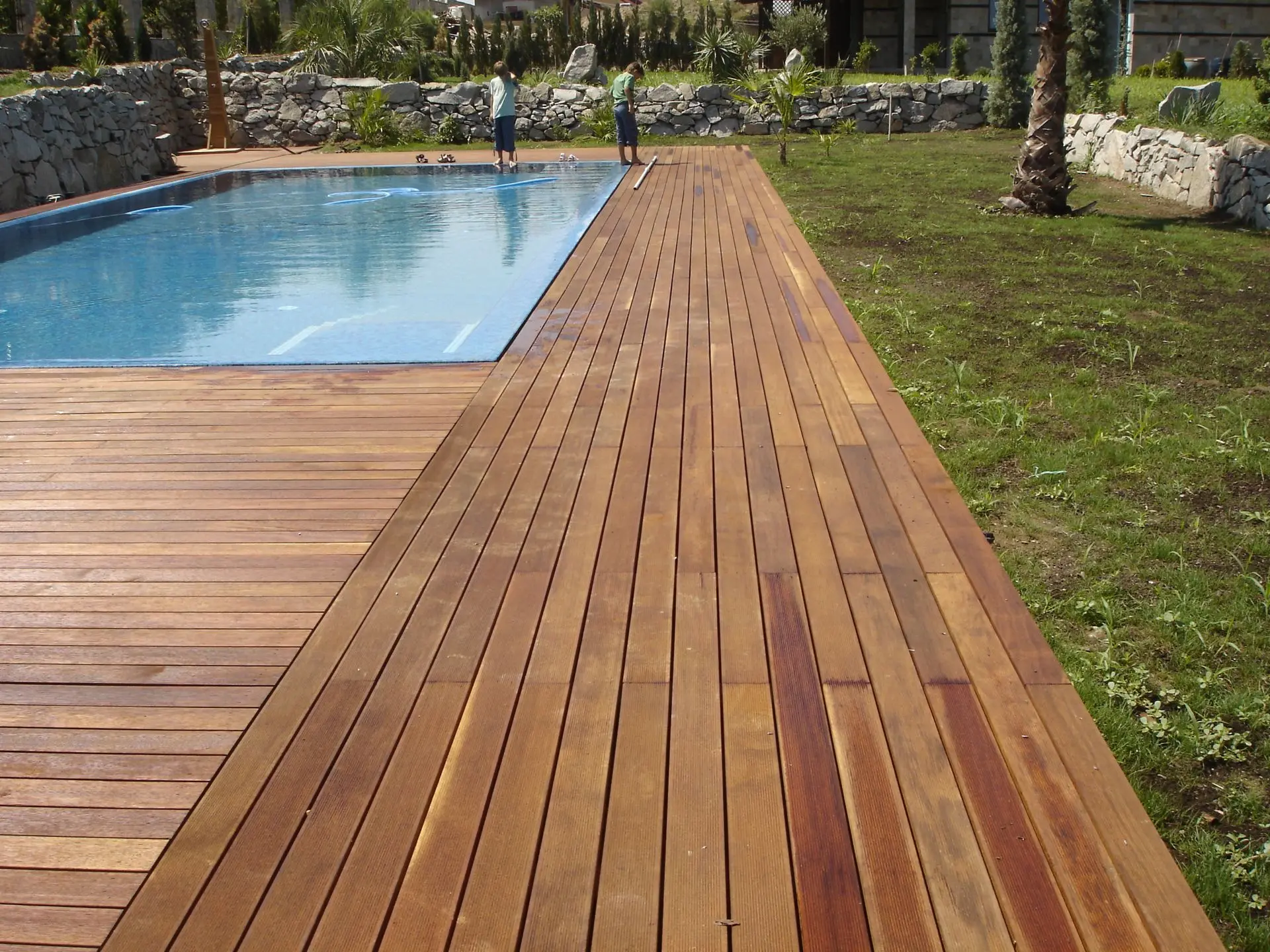 teak
teak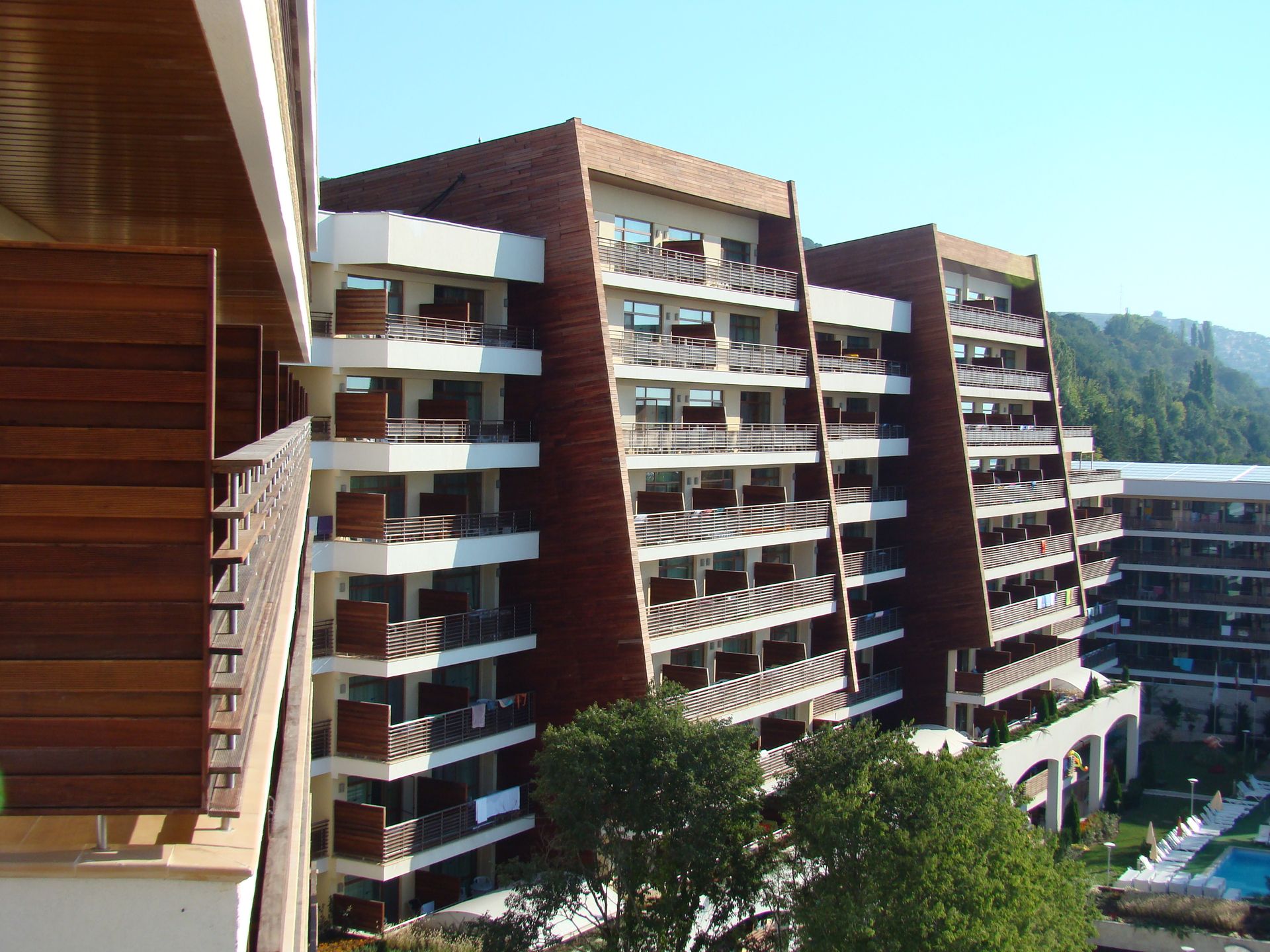 ipé
ipé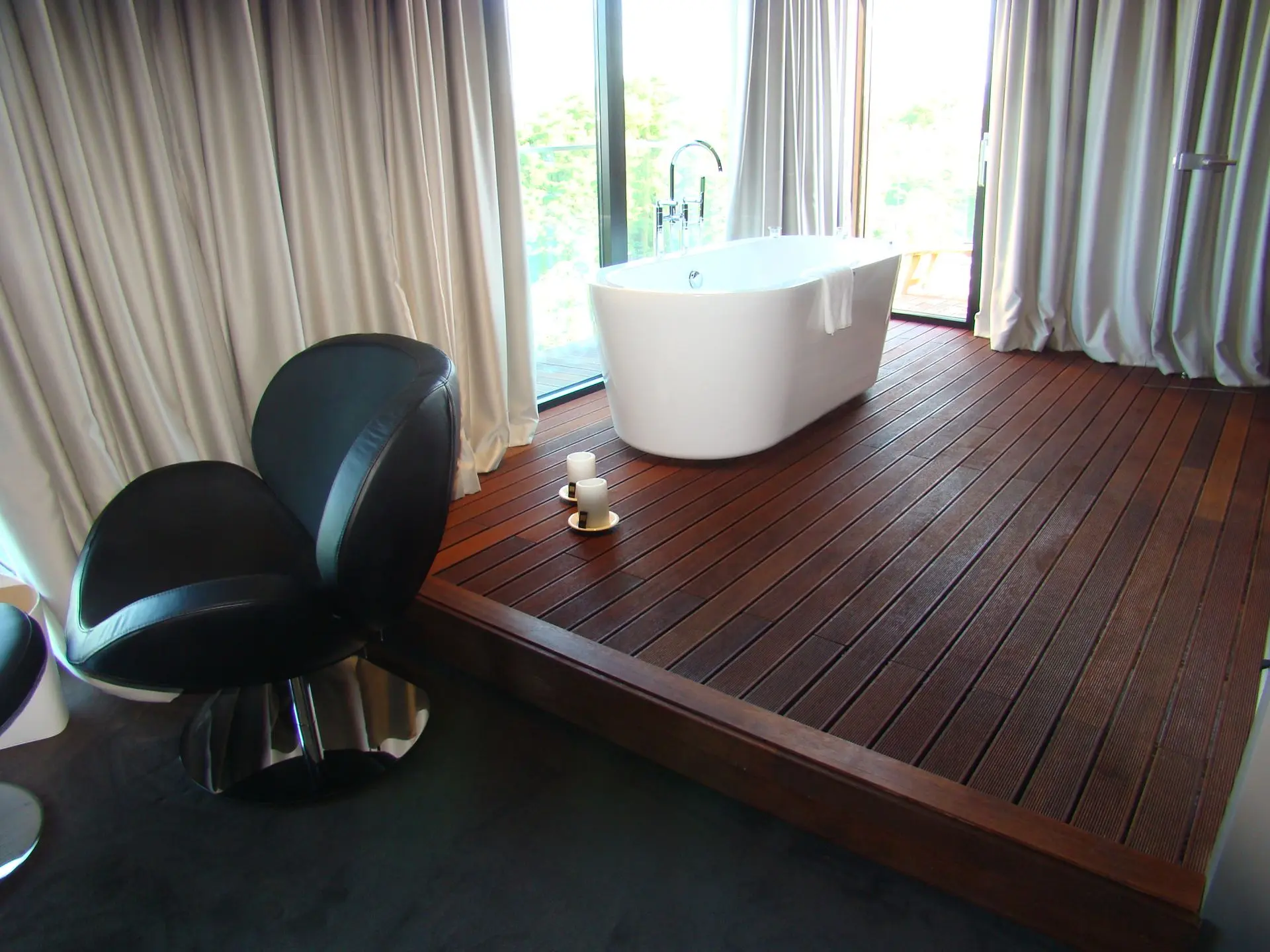 merbau
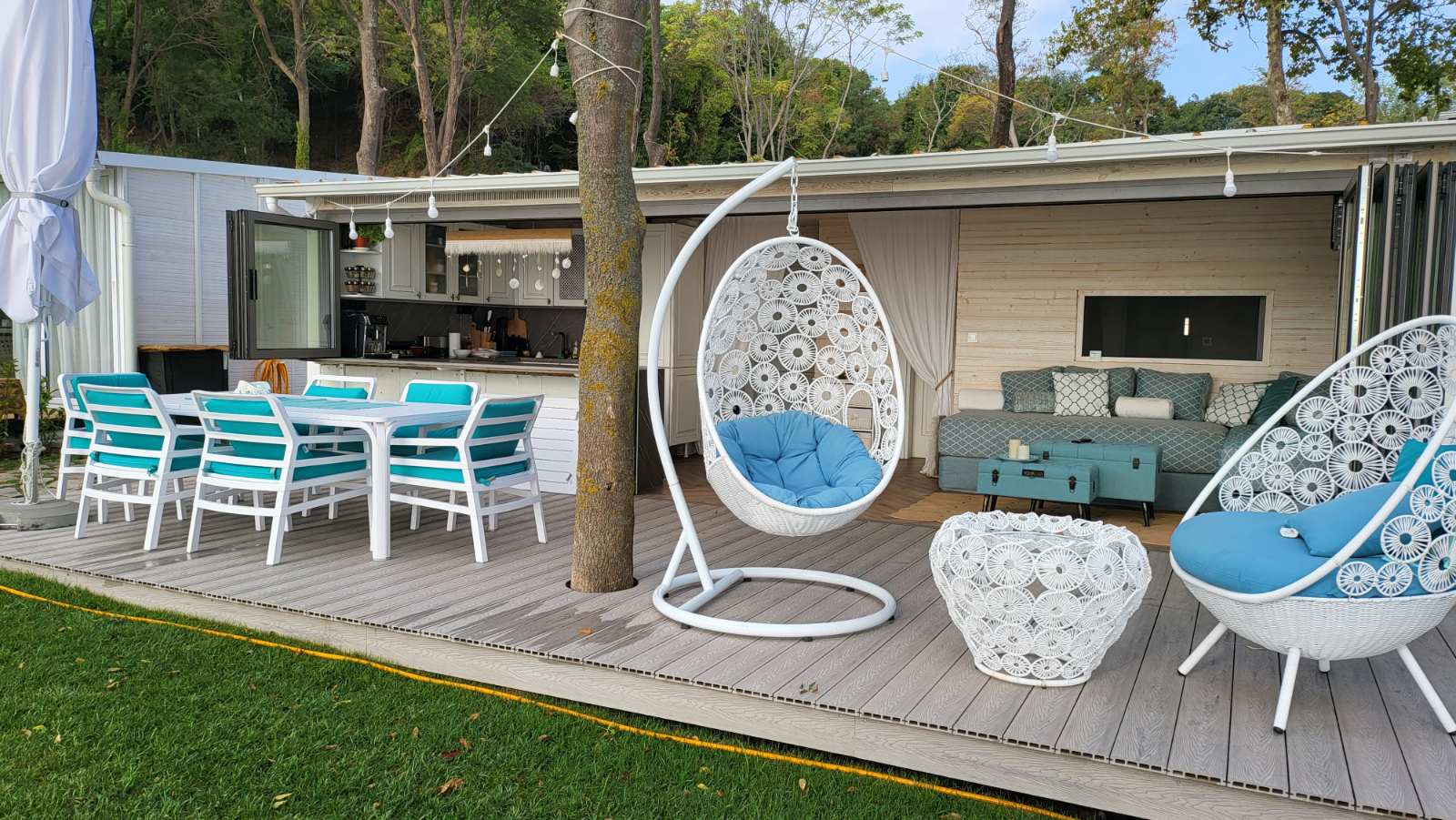 Composite
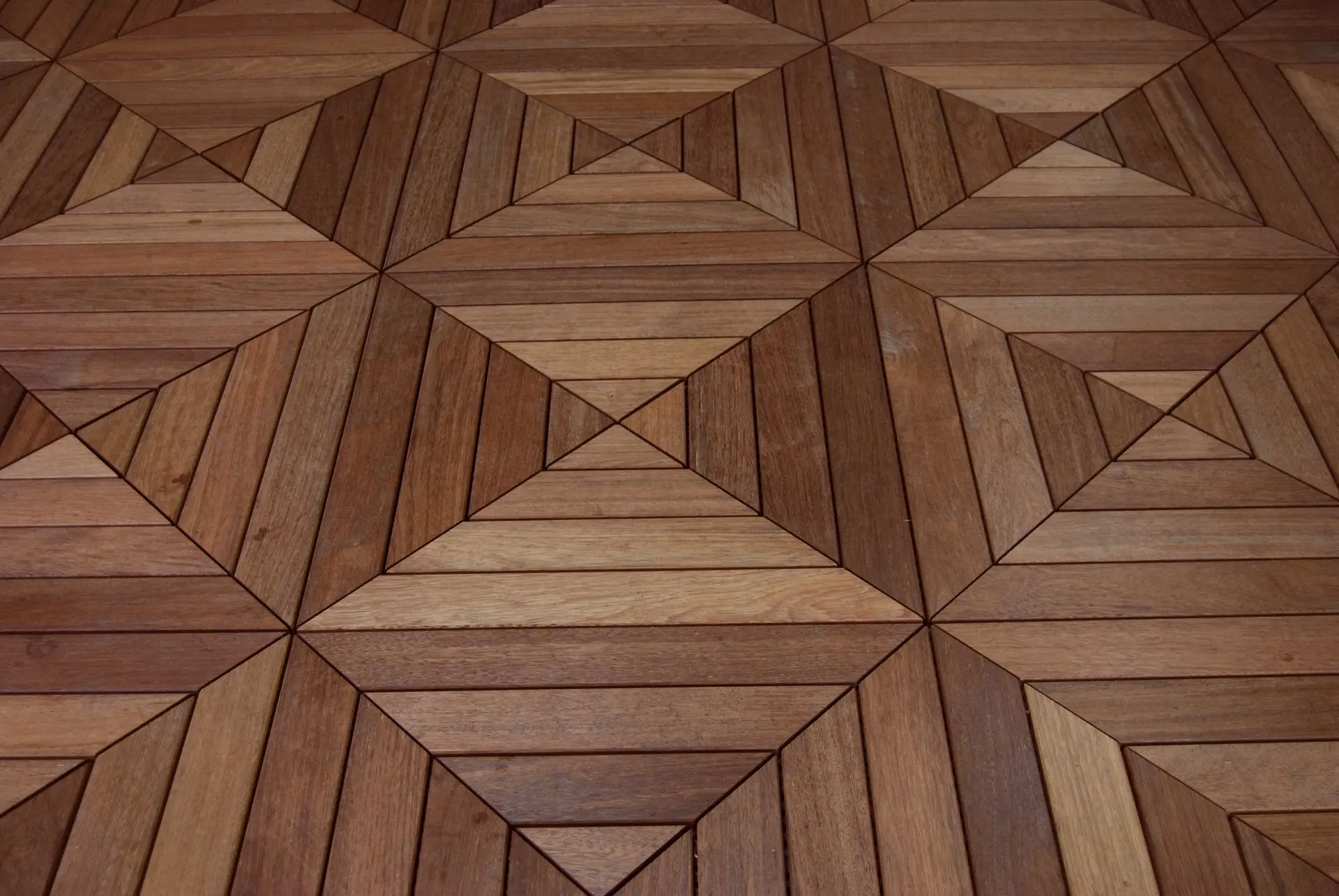 thermo-treated wood
Which decking suits your space?
The same material behaves differently on a roof terrace, around a pool and in a garden under trees. The exposure, the base and the way it is used determine which solution will work in the long term.
Terrace in direct sun
Strong sun lightens the surface and raises the temperature of the boards. What matters here is a lighter tone, the profile and regular oiling, if you want to keep the original color.
Around a pool or spa area
Constant wetting calls for an anti-slip (grooved) profile and good drainage beneath the deck. Teak and Ipé handle water very well and stay stable through frequent wet–dry cycles.
Year-round use
Freezing and thawing put every outdoor floor under strain. Free water run-off, the spacing between the boards and ventilation underneath are key — that is what protects the material through the winter.
Garden under trees or in shade
In shaded, damp areas leaves, moisture and grime collect on the surface more easily. What helps here is the slope, good drainage and a more durable wood species, or composite.
Heavy use
In restaurants, hotels and shared spaces the deck takes constant traffic, furniture and cleaning. The joist spacing and the board thickness are calculated for the expected load.
Minimal maintenance
If you would rather not deal with annual upkeep, there are two options: wood left to weather naturally to gray, or composite decking, which needs no oil.
Not sure where your project fits? Send us photos of the space, an approximate area and the type of base (concrete, roof insulation or ground) — and we will recommend a suitable material and substructure.
Why choose decking from Artistico
An outdoor floor works in conditions an indoor one never meets — sun, rain, frost and constant changes in humidity. That is why the material, the substructure and the installation have to be matched to the specific space.
Over 25 years of experience with natural wood
We have been manufacturing and installing wood flooring since 1998. Experience with both indoor and outdoor solutions lets us judge which material will perform well in the specific conditions on site.
Several wood species and composite
We work with thermo-treated wood, teak, Ipé, merbau and composite decking. We recommend based on your budget, the expected lifespan and the style of the space — not the most expensive option by default.
Decking systems to suit the base
Adjustable pedestals over waterproofing and flat roofs, joists directly on level concrete, or an aluminum substructure for larger projects and heavier loads.
Concealed or screw-fixed installation
The clip system leaves the surface free of visible screws and allows a single board to be replaced. Some profiles are fixed with visible screws — this is agreed in advance.
Solutions for wet areas
A grooved anti-slip profile, a 1–2% fall away from the building and free drainage beneath the deck — for safety and long life around pools and spa areas.
One team for the whole project
Delivery, preparation of the base, installation of the substructure and the boards, and ongoing maintenance. Clear responsibility and a single warranty for the whole job.
Wood or composite decking?
Before you choose a specific wood species, decide which type of decking suits you. Natural wood and composite (WPC) behave differently over the years and call for different care.
Wood decking
Real wood with visible grain, a warm feel to the touch and a character that changes over time. It can be sanded and refreshed, and if you wish, the color is maintained with oil.
- Natural grain and warmth — every board is different
- Weathers to gray or keeps its tone with periodic oiling
- The surface can be refreshed and restored
- Thermo-treated wood, teak, Ipé and merbau — different price brackets
- A good choice when you want an authentic look
Composite decking
WPC combines wood fibers and polymer. The surface keeps its color and needs no annual care, but the feel and the look are more uniform than those of natural wood.
- No annual oiling — just routine cleaning
- An even color that holds over time
- Does not rot or crack the way natural wood does
- Cannot be sanded — a damaged board is replaced
- A good choice when maintenance has to be minimal
Which one suits you better? If you value the authentic feel and are willing to give it periodic care — choose wood. If minimal maintenance and a consistent look are the priority — take a look at composite decking.
Which wood species we use for outdoor flooring
If you have chosen natural wood, the next decision is which species. The three main options differ in expected lifespan, the maintenance they need, how their color changes over time, and price.
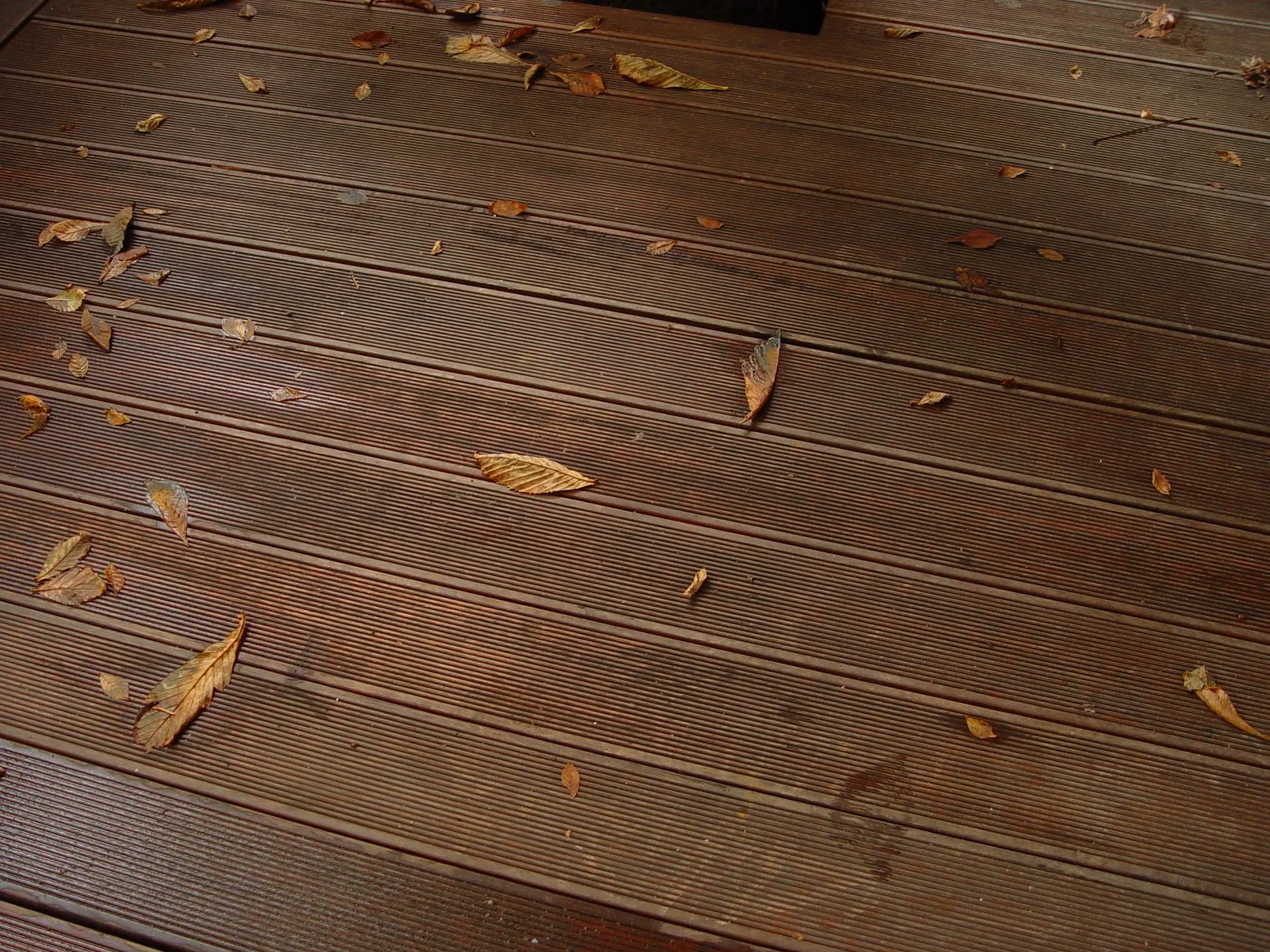
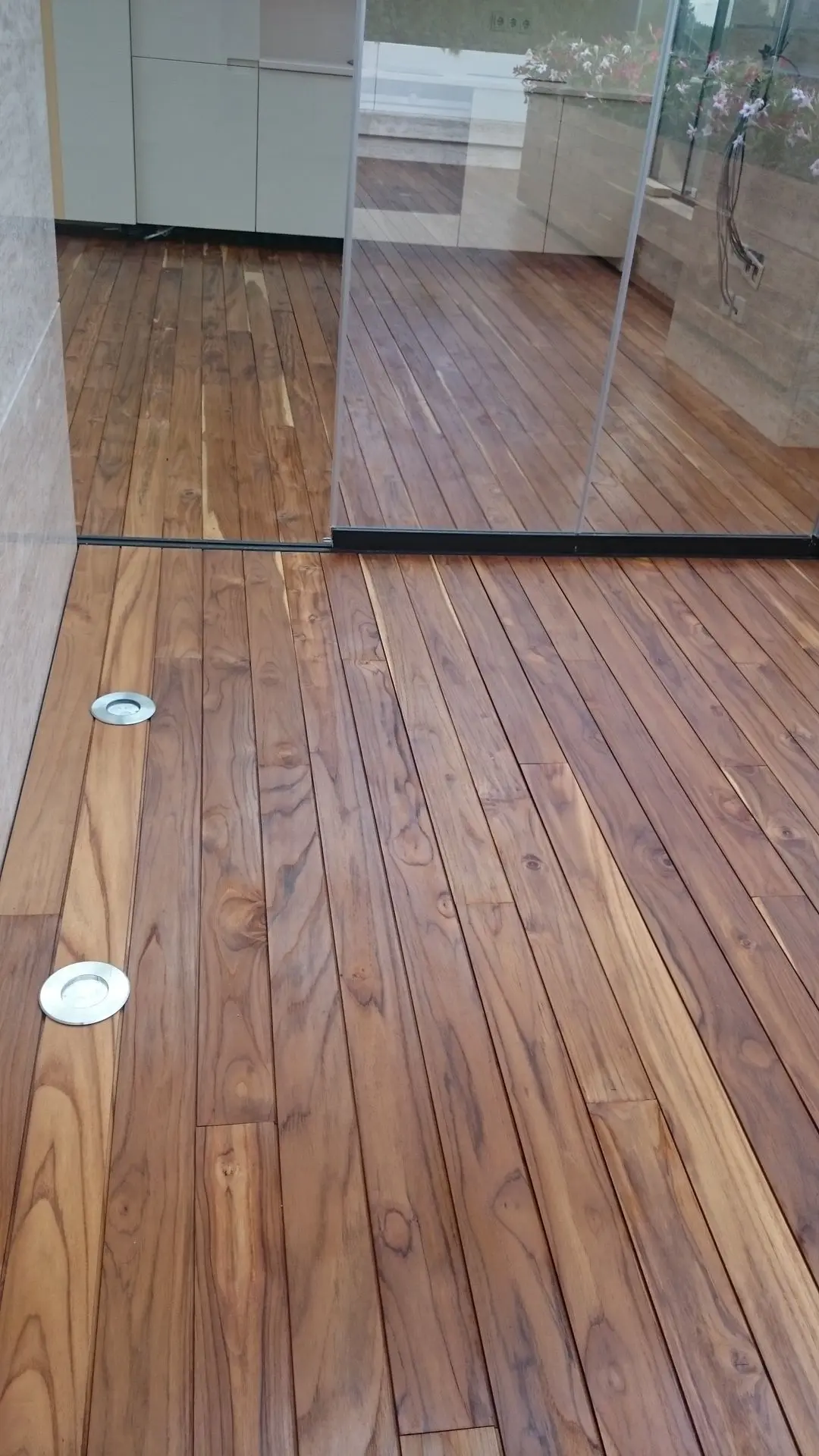
Thermo-treated wood
European ash or pine, heat-treated at 200°C — a process that changes the cell structure and makes the wood resistant to moisture and insects. No chemicals. A warm brown tone that weathers attractively to gray if it is left unoiled. The most practical balance between price and durability for Bulgaria's climate.
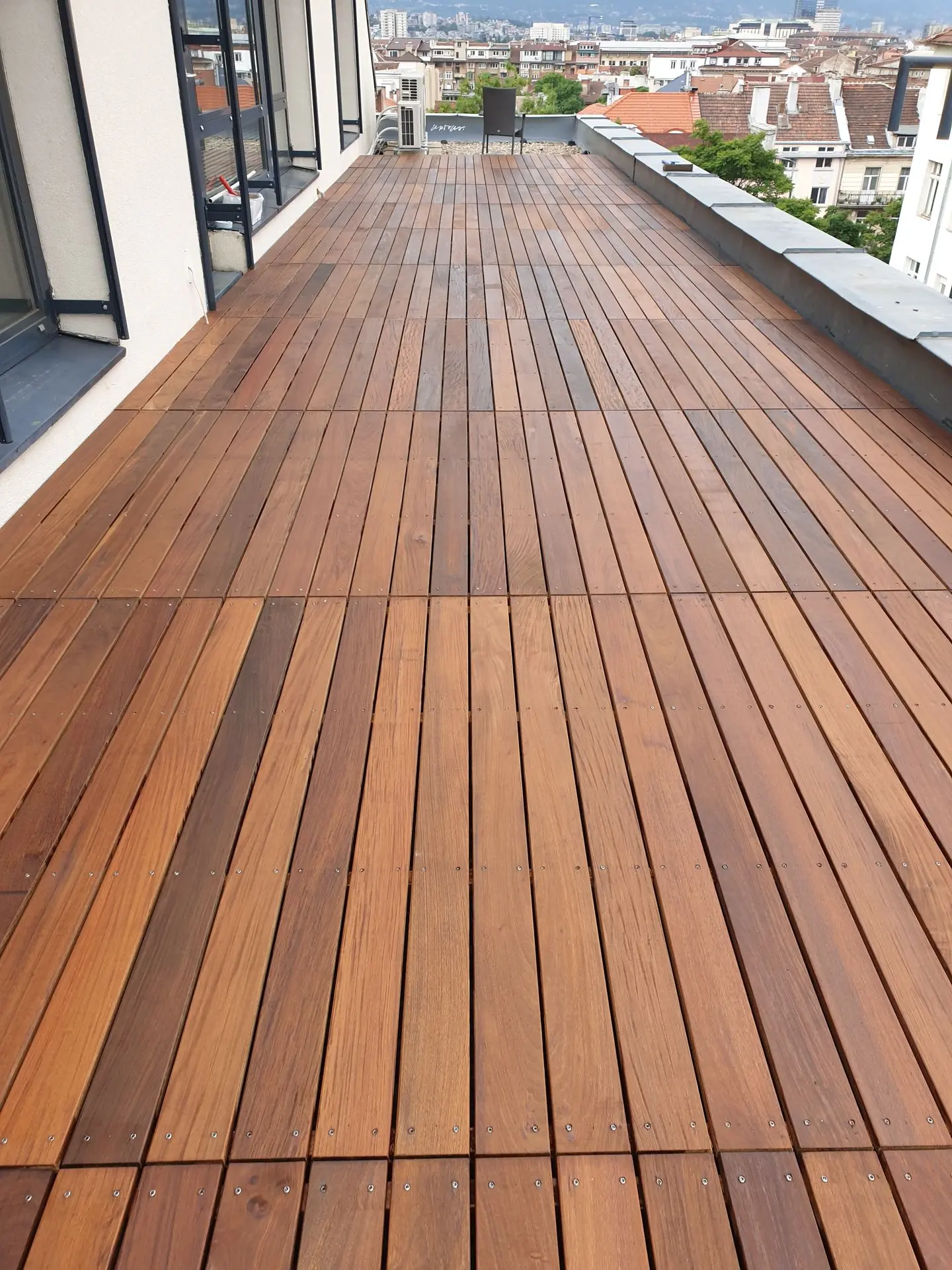
Teak
A tropical wood from Southeast Asia — naturally oily and moisture resistant without any treatment. Golden brown with fine dark streaks. The wood that has covered yachts, luxury pools and seaside terraces for over a century. No mandatory maintenance — it weathers to a noble gray tone.
Ipé (Brazilian walnut)
One of the densest woods in the world, native to South America. Dark brown, turning almost black over time. Naturally durable without heat treatment — the density alone keeps moisture and insects out. More expensive, but it lasts for generations. An extremely dense wood — it calls for specialist installation and the right tools.
Material by material — how they compare
Compare the three natural wood species and the composite alternative. Each one is "right" for a certain scenario — we help you choose based on your project.
| Feature | Thermo-treated wood | Teak | Ipé | Composite |
|---|---|---|---|---|
| Origin | European ash or pine | Southeast Asia | South America | Wood fibers + PVC |
| Expected lifespan | 20–25 years | 30–40 years | 40–50 years | 15–25 years |
| Price | Mid-range | High | Very high | Mid to high |
| Durability | High (thermo-treated) | Natural (oily resins) | Exceptional (density) | Not wood — does not rot |
| Maintenance | Oil every 1–2 yrs (optional) | None required | None required | Maintenance-free |
| Feel | Natural wood, soft | Natural, oily and smooth | Natural, dense and heavy | Synthetic |
| Color over time | Gray patina (or maintained brown) | Gray patina (or maintained golden) | Dark brown to black | Keeps its original color |
| Behavior when wet | Stable through frequent wet–dry cycles | Very good — naturally oily | Excellent — high density | Does not absorb water |
| Temperature in the sun | Moderate — light tone | Moderate | Higher — dark surface | Higher with dark colors |
| Option to refinish | Can be sanded and re-oiled | Can be sanded and re-oiled | Can be sanded | Not sanded — individual boards are replaced |
For most Bulgarian terraces we recommend thermo-treated wood — the best balance of price, longevity and authentic feel. We choose teak for luxury projects around pools, spa areas and seaside properties. Ipe — when the client wants a "for generations" solution and maximum durability.
Decking is more than just the boards
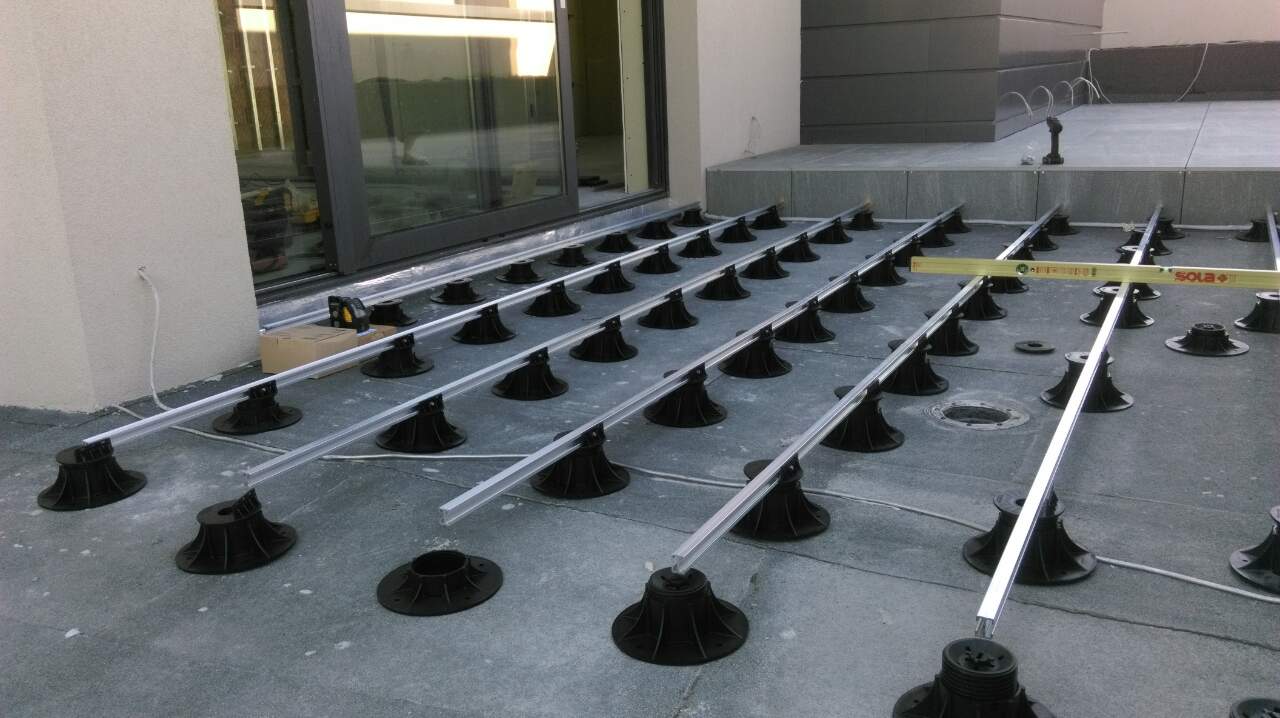
The visible surface is 30% of the job. The other 70% is in the substructure — pedestals, joists, slope, drainage, fixing. A mistake here means boards that warp, creak or rot. That is why with decking everything starts from the base.
Adjustable pedestals
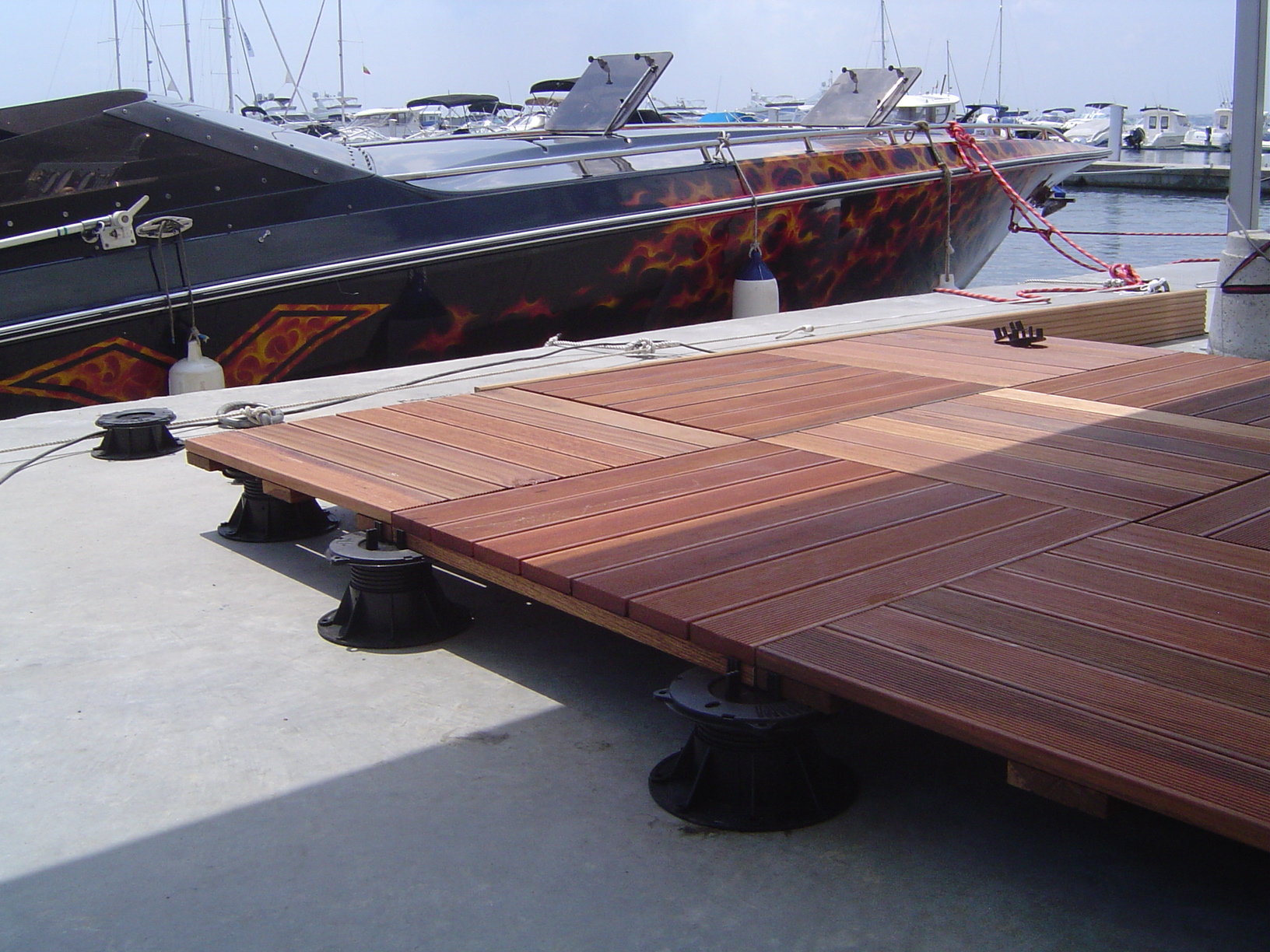
Plastic or aluminum height-adjustable pedestals — they compensate for uneven bases without any concrete work. Drainage under the floor — water drains away freely.
Joists of thermo-treated wood or aluminum
The same thermal treatment as the boards, or an aluminum profile for larger projects. Joist spacing of 40–50 cm depending on board thickness.
Hidden clips
The boards attach to the joists with metal clips — no visible screws. A clean look, and the option to replace an individual board later.
Natural slope of 1–2%
The decking is designed with a slight slope away from the building — water runs off and does not pool between the boards. This is key to longevity.
Ventilation under the deck
An air gap is left between the deck and the base, and the 4–6 mm spacing between the boards lets air circulate. A dry underside is just as important as a protected top surface.
Configure your decking
Every outdoor floor is planned around the space and the base. Together we decide on the wood species, the board profile, the substructure and the maintenance routine.
Choose a wood species
The three wood species work for different scenarios. A short summary:
Board profiles
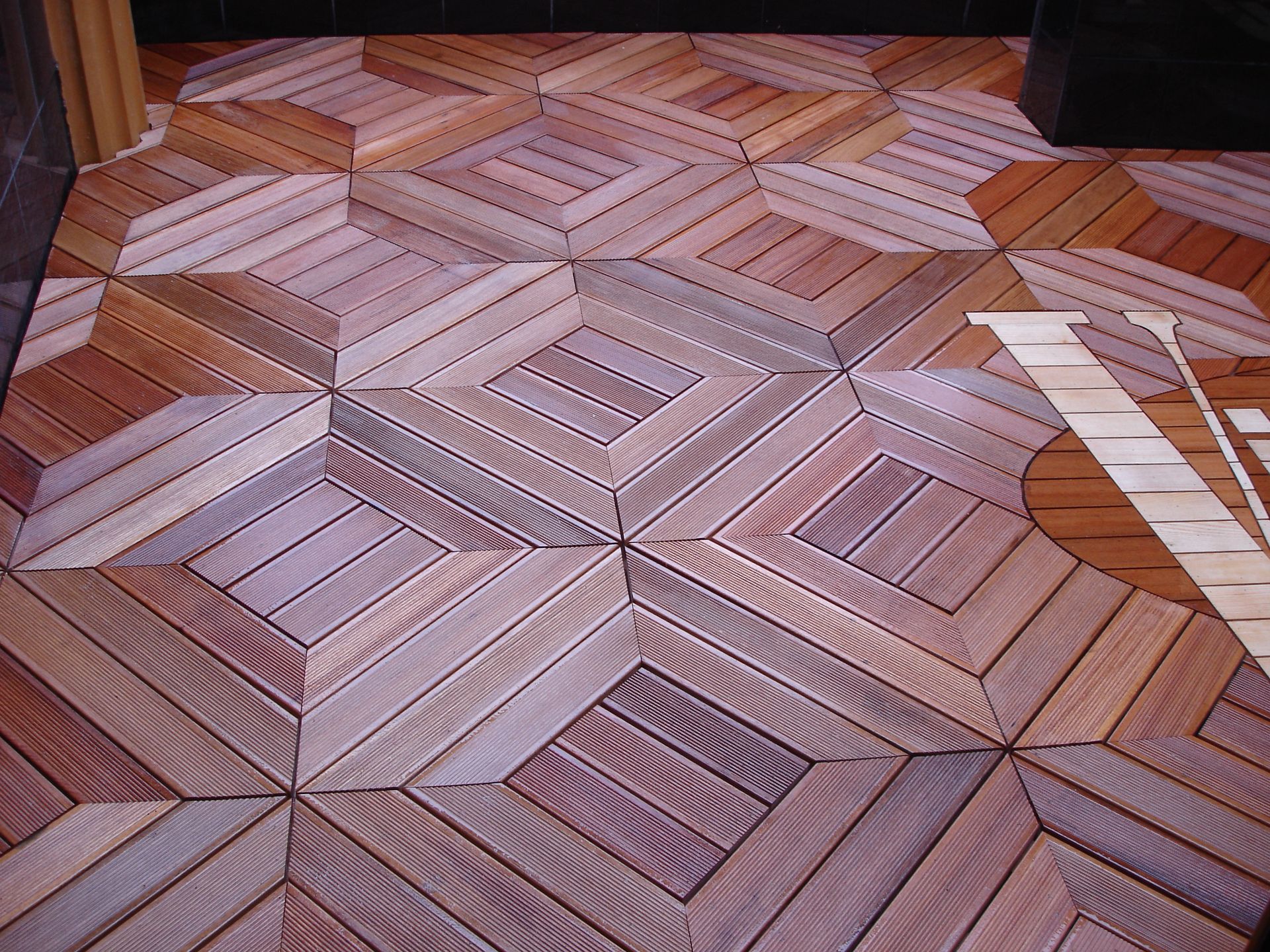
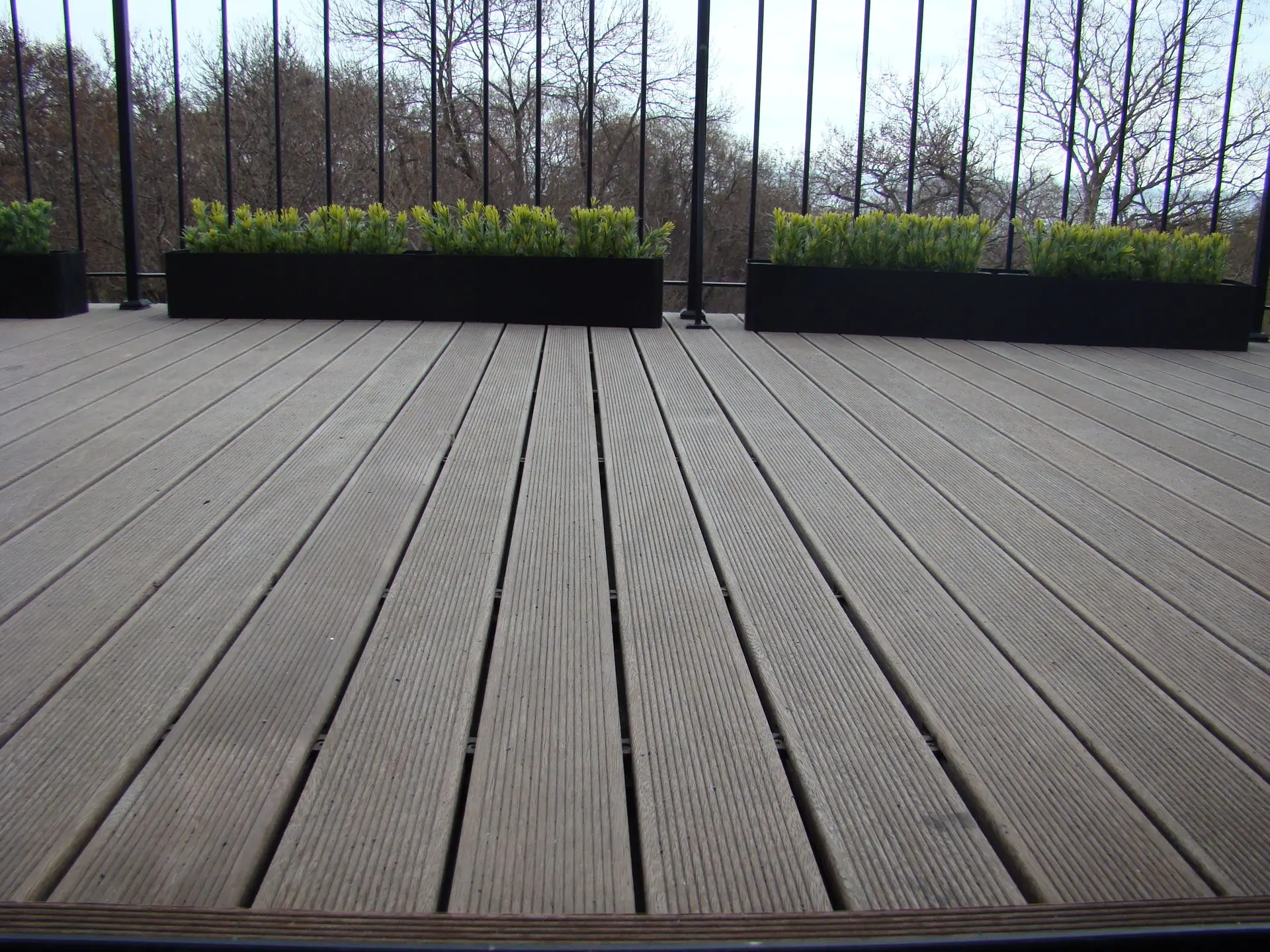
Smooth: a clean modern look, closer to indoor parquet. Grooved (anti-slip): small channels on the surface — safer when wet, recommended around pools. Double-sided: one side smooth, the other grooved — can be flipped during renovation.
Floor substructure
Adjustable pedestals: for terraces over waterproofing, flat roofs, uneven bases. Joists directly on concrete: when the base is flat and impermeable. Aluminum substructure: for large projects and heavier loads.
Maintenance
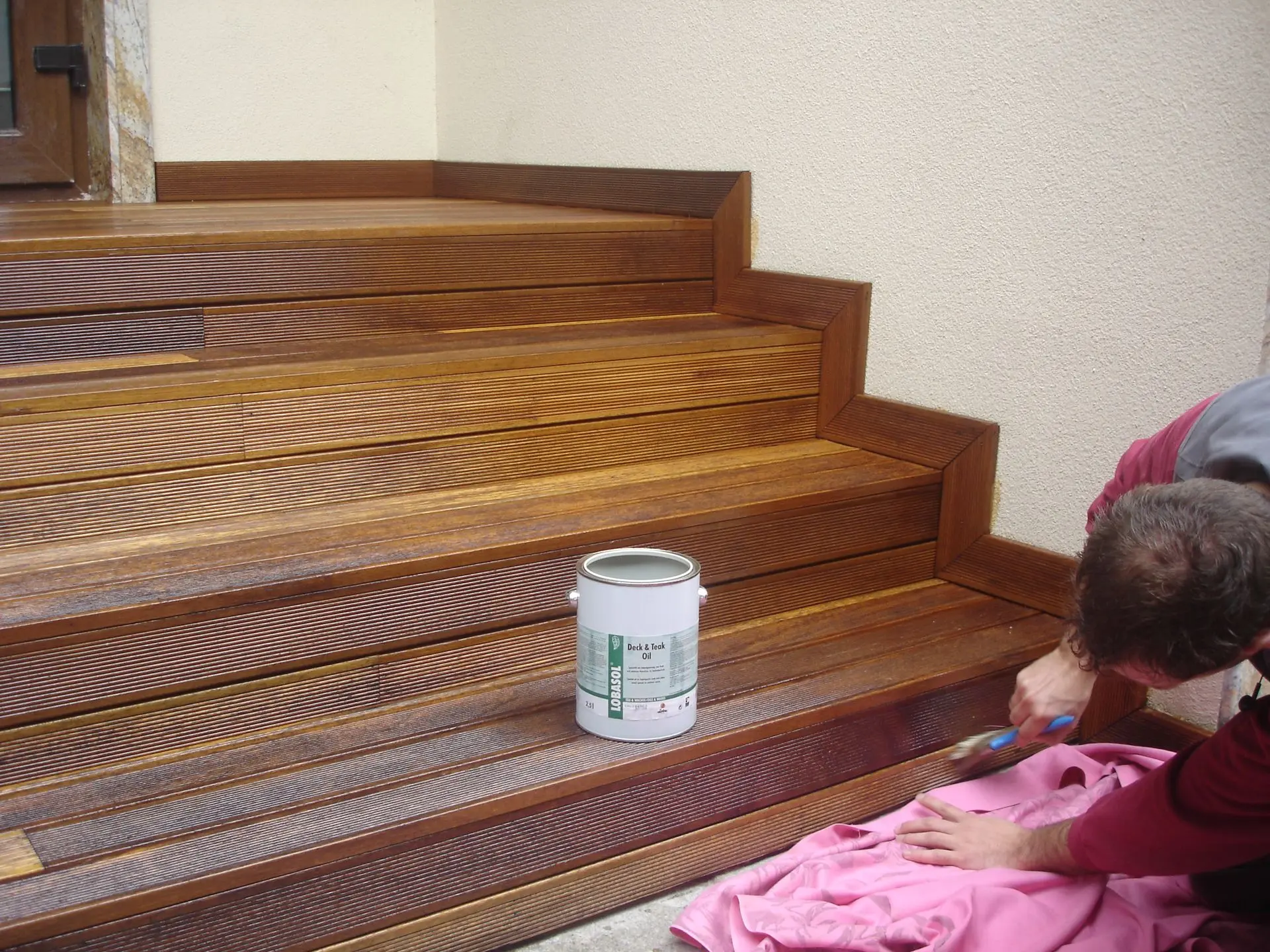
Thermo-treated wood: oiling every 1–2 years — keeps the brown color. Without oil — the wood weathers beautifully to grey. Both options are fine. Teak: no mandatory maintenance — the natural oily resins protect the wood. It weathers to a noble grey tone if left unoiled. Ipe: no mandatory maintenance — it weathers naturally to grey. It can be oiled if you want to keep the dark color.
What determines the price of decking?
An outdoor deck is priced as a complete solution, not simply per square meter of boards. The price covers the material, the substructure, preparing the base and the complexity of the installation.
The material you choose
Thermo-treated wood, teak, Ipé, merbau and composite sit in different price brackets. The difference comes from origin, density, expected lifespan and the maintenance required.
Area, shape and profile
The size and shape of the space determine how much material is needed and how much waste there is when cutting. Patterned layouts and multiple corners take more time to install.
Floor substructure
Adjustable pedestals, thermo-treated timber joists and an aluminum substructure are priced differently. The choice depends on the base, the slope and the expected load.
Base preparation
The price is also affected by the condition of the base, any leveling required, drainage solutions and the presence of waterproofing that must not be damaged.
Installation, details and access
The fixing method, the finishing profiles, the steps and transitions, as well as access to the site and its location, all affect the final cost.
How to get an indicative price: send us the approximate area, the type of base (concrete, roof waterproofing or soil), photos of the space and your location. You do not need a finished design — a few photos and rough dimensions are enough for a first consultation.
What decking withstands
The Bulgarian weather tests everything outdoors. Decking is the first floor to meet the morning sun and the evening snow. Hence the four criteria for a long-lasting outdoor floor:
UV resistance
The color fades only at the surface — the structure remains.
Moisture drains away
Drainage under the floor + a 1–2% slope — nothing pools.
Freezing
The wood does not hold water — no risk of cracking.
Biological pests
Thermal treatment or natural density (teak, Ipe) — resistant to rot and insects.
From inquiry to finished terrace — in 7 steps
One team. One process. One responsibility — from the first consultation to installation and the care that follows.
Consultation and initial information
You send us the approximate area, the type of base (concrete, roof insulation or soil), photos of the space and an idea of your budget and timeline.
Site visit and measuring
For projects of a suitable size we arrange a site visit — measuring, assessing the base and the slope, checking the waterproofing and whether drainage solutions are needed. For smaller projects we work from photos and dimensions.
Recommendation and individual quote
Wood species, profile, substructure — explained with alternatives. An exact price.
Delivery 2–4 weeks
We keep thermo-treated wood in stock for smaller projects. Teak and Ipe — usually made to order.
Preparation of the base and the substructure
Adjustable pedestals or leveled joists. Drainage solutions. Waterproofing if needed.
Installation of the decking
Hidden clips, 4–6 mm spacing between the boards for expansion. Final details — joints, edges, transitions.
Handover, warranty and care
We recommend the first oiling after 6 months for thermo-treated wood — optional. Teak and Ipe require no oil. An annual check-up if needed.
What everyone asks about decking
Answers about material choice, price, substructure, installation and maintenance. If your space has specific conditions, send us photos and an approximate area.
Do you have a specific space in mind?
Send us photos, an approximate area and the type of base — we will recommend a suitable material and substructure.
Ready for a space you will use for years to come?
Send us photos, the approximate area and the type of base. We will review the conditions of your space and suggest a suitable material, construction and indicative budget — with no obligation.
Request a quote for wooden decking
Describe your project — area, base type (concrete / roof / ground), preferred wood species (or ask for a recommendation). We will get in touch within one working day.